New Jersey DWI Law 2026 : Alcotest 9510 - HGN - Video Evidence and the Changing Defense Landscape
By Tom the producer | Mighty MERP Podcast & NJ Criminal Podcast
New Jersey DWI defense is in an age of tectonic shift.
Breath-testing technology has changed.
The admissibility of results from the Alcotest 9510 remains a major point of litigation.
Plea negotiations have changed the practical landscape of municipal court.
Body-worn camera footage provides defense attorneys with evidence that previous generations of lawyers often never had.
And artificial intelligence is beginning to promise faster ways to review all of that discovery.
But faster is not necessarily better.
That was one of the strongest themes to emerge from a recent Mighty MERP Podcast conversation hosted by New Jersey criminal defense attorney Melissa Rosenblum with DWI defense attorneys Peter Lederman and Evan Levow.
This was not an episode of the NJ Criminal Podcast. But the discussion is worth examining here because it offered something more useful than a generic overview of New Jersey DWI law: three experienced defense lawyers comparing what they are actually encountering in DWI cases, where they disagree, and what they believe attorneys should be looking for.
The conversation ranged from the Alcotest 9510 and State v. Cunningham to Horizontal Gaze Nystagmus testing, body-camera footage, plea negotiations, prior DWI convictions and the limits of AI-assisted evidence review.
Taken together, their discussion illustrates a larger point about modern criminal defense:
The evidence generated by a system is not necessarily the same thing as the story told by the evidence.
The Alcotest 9510 Problem
Much of the conversation centered on the Alcotest 9510, the newer breath-testing device being deployed in New Jersey.
For decades, breath testing has occupied an unusual position in DWI prosecutions. A numerical blood alcohol concentration can appear objective and definitive to a defendant — and potentially to a factfinder.
But the legal admissibility of a scientific measurement involves more than whether a machine produced a number.
The attorneys' discussion focused on whether results produced by the Alcotest 9510 can presently be admitted into evidence and the continuing litigation surrounding the device.
Evan Levow took an aggressive position: defense lawyers should be challenging admission of the results.
The discussion repeatedly returned to State v. Chun, the landmark New Jersey litigation concerning the Alcotest 7110, as well as the more recent litigation surrounding the 9510 in State v. Cunningham.
The lawyers' concern is essentially a foundational one.
The 9510 is not simply another physical copy of the 7110. The technology and procedures differ in meaningful ways. Peter Lederman specifically discussed differences involving the control testing process, including the move away from the simulator-based system associated with the earlier device.
That creates a fundamental evidentiary question:
What has to happen before results from a new breath-testing device can be treated as scientifically reliable evidence in a New Jersey courtroom?
That may sound highly technical. For an individual defendant, however, it can determine whether the prosecution enters court with a numerical BAC result or has to prove impairment primarily through other evidence.
And that leads directly to the next issue.
What Happens When the Number Isn't the Case?
Levow described DWI prosecutions as having two broad evidentiary paths.
One is the number — breath or blood evidence.
The other is what he called the physicals.
That includes evidence such as:
- the defendant's driving;
- the initial interaction with police;
- speech and communication;
- physical appearance;
- balance;
- performance on field sobriety tests; and
- what the defendant actually looks like on police video.
This distinction becomes especially important when the admissibility of the breath result is contested.
A case does not disappear simply because a breath reading is challenged.
Police observations can still become the prosecution's case.
But observation evidence also creates opportunities for scrutiny that a numerical BAC can sometimes overshadow.
Does the video match the police report?
Does the person actually appear impaired?
Were the field sobriety tests administered under appropriate circumstances?
Is there another explanation for what the officer interpreted as impairment?
Those are very different questions from simply asking what number appeared on an instrument.
The Body Camera Has Changed DWI Defense
One of the most compelling portions of the discussion involved something far less technologically exotic than the Alcotest 9510:
watching the video.
Lederman described a DWI case in which an officer claimed that the defendant had moved into oncoming traffic and nearly caused a head-on collision.
That allegation sounds devastating.
But Lederman reviewed the available video.
He described examining screenshots separated by only a few seconds and seeing evidence that, in his assessment, did not support the alleged movement into the opposing lane. He also noted the behavior of another vehicle as part of his analysis.
Then he found something else.
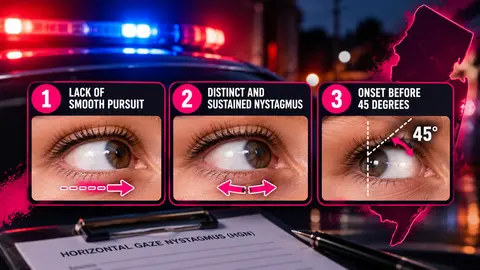
Another officer performed an HGN test — Horizontal Gaze Nystagmus.
Afterward, the stopping officer questioned the officer who administered the test about whether he was certain about what he had observed.
That exchange mattered.
It wasn't merely the words. The context of the conversation mattered.
Lederman ultimately spoke directly with the officer, discussed what he had found and described developing a productive dialogue about the evidence.
According to Lederman, the DWI charge was dismissed.
Whatever lessons someone takes from that particular case, one is difficult to dispute:
The important evidence was not contained in a single breath-test result or checkbox on a police report.
It was buried inside the case.
What Is HGN?
Horizontal Gaze Nystagmus, commonly abbreviated HGN, refers to involuntary jerking of the eyes as they move horizontally.
It is one component commonly associated with standardized field sobriety testing.
An officer conducting the test typically has the subject follow a stimulus with the eyes while watching for specific indicators.
The podcast discussion is particularly interesting because HGN arose not as an abstract explanation of field sobriety testing, but as part of Lederman's description of reviewing an actual case.
Levow immediately expanded the issue beyond alcohol.
He stressed the importance of knowing the individual defendant's medical history and considering neurological, muscular, injury-related or other physical issues when evaluating observations attributed to impairment.
That reflects an important distinction in criminal defense:
An observation and the interpretation of that observation are two different things.
An officer may genuinely observe something.
The legal question can become what that observation actually establishes.
“Failed the Field Sobriety Tests” Is the Beginning of the Analysis
Field sobriety testing is frequently compressed into deceptively simple language.
A report may say that a driver "failed" a test.
For defense counsel, that should not necessarily end the inquiry.
It may begin it.
How was the test explained?
Was it demonstrated correctly?
What were the environmental conditions?
What exactly did the person do?
What did the officer score as a clue?
Does the video support the written description?
Were there physical or medical circumstances that could affect performance?
Levow emphasized the value of attorneys taking standardized field sobriety test training themselves so that they understand the details of how the tests are administered and scored.
That knowledge changes the review of police footage.
Instead of watching a video and asking only, "Does this person look intoxicated?" an attorney can ask much more specific questions about what the officer did, what the subject did and whether the conclusions in the report are supported by what appears on screen.
The Police Report Is Not the Video
This distinction surfaced repeatedly throughout the conversation.
A written report is a reconstruction.
Video is also imperfect — camera angles, obstructions, audio quality and perspective all impose limitations — but it can provide an independent source against which written descriptions and later testimony can be compared.
Rosenblum described a two-stage process in her office.
Interns may initially review video, timestamp important sections and provide their observations. Rosenblum then conducts her own review of the evidence.
That approach produces something valuable: another set of eyes.
But all three attorneys ultimately returned to the importance of the lawyer personally understanding the evidence.
That became particularly important when the conversation turned to artificial intelligence.
Can AI Review Police Video for a DWI Lawyer?
Lederman described receiving a call concerning software designed to use artificial intelligence to analyze large amounts of video evidence, including body-worn camera footage.
On its face, the proposition is attractive.
A criminal case can contain hours of footage from multiple officers. Reviewing all of it is expensive and time-consuming. Software capable of identifying significant moments could dramatically reduce the workload.
Lederman was skeptical of substituting that process for his own review.
His reason gets to the heart of the episode.
Clients hire experienced attorneys in part because those attorneys have learned what to notice.
A machine might identify words.
It might produce a transcript.
It might eventually become very good at recognizing standardized events.
But criminal defense often depends upon something that does not announce itself as "important."
It might be an officer's reaction.
A hesitation.
A contradiction between two videos.
Something visible in the background.
A change in tone.
An unusual sequence of events.
Or, as in Lederman's example, one officer asking another whether he was really certain about what he had just observed.
A Transcript Doesn't Capture Everything
Rosenblum made another important point during the AI discussion:
A transcript does not necessarily capture tone.
Anyone who works extensively with transcripts knows the problem.
Words stripped of timing, emphasis, facial expression and context can convey something very different from the underlying conversation.
Consider the difference between an officer confidently confirming an observation and an officer sounding uncertain about it.
The transcript may contain essentially the same words.
The video may tell a very different story.
Levow agreed that technology can help with transcription and other aspects of evidence management, but emphasized that the attorney still needs to watch the footage.
More importantly, he argued that it needs to be watched with a trained eye.
That distinction is important.
The advantage isn't simply human versus machine.
It is experienced human analysis versus automated summarization.
Why Preparation Changes Negotiations
The conversation eventually moved from evidence to something less tangible: credibility.
Rosenblum, Lederman and Levow discussed the effect an attorney's willingness to actually try cases can have on negotiations.
Their argument was not that reputation magically wins cases.
In fact, Lederman specifically rejected that idea.
Reputation has to be built by doing the underlying work:
Reviewing the discovery.
Knowing the facts.
Finding the inconsistency.
Understanding the testing.
Preparing the cross-examination.
And being willing to proceed when the parties cannot reach an acceptable resolution.
Rosenblum described the practical difference between telling a prosecutor that a case should be placed on the trial list and making that statement when the prosecutor knows the defense attorney is actually prepared to try it.
Lederman described earning credibility with a judge early in his career after litigating a difficult matter through trial.
The broader lesson extends well beyond DWI practice.
Negotiating strength is often created long before the negotiation begins.
Plea Negotiations Have Changed the Landscape
The attorneys also discussed the evolving role of plea negotiations in New Jersey DWI cases.
For years, New Jersey DWI practice operated under unusually restrictive rules surrounding plea bargaining.
The attorneys described a changing environment in which negotiation now plays a more explicit role, while also emphasizing that practices can vary significantly among municipal courts, prosecutors and judges.
Lederman made an important historical point: cases were still resolved even under the old restrictions.
Prosecutors have ethical responsibilities concerning cases they believe they cannot prove, and evidentiary weaknesses have always affected outcomes.
What has changed is the framework in which those conversations occur.
The group also discussed the practical pressures on municipal courts — crowded calendars, backlogs and the impossibility of trying every case.
But they repeatedly returned to the same prerequisite for meaningful negotiation:
Know the case better than the other side.
The 9510 Debate Is Really About Something Bigger
At first glance, the episode appears to be primarily about a breath-testing machine.
It isn't.
The Alcotest 9510 is the catalyst for a much broader conversation about what happens when technology enters the criminal justice system.
A machine produces a number.
Software produces an analysis.
A body camera produces hours of footage.
AI produces a transcript.
None of those outputs interprets itself.
Someone still has to determine what the evidence means, whether the process that produced it was reliable, whether it is legally admissible and whether other evidence contradicts it.
The 9510 controversy therefore sits at the intersection of science, law and procedure.
The AI discussion sits at almost exactly the same intersection.
Both involve a temptation to treat technological output as inherently authoritative.
Experienced criminal defense lawyers tend to ask a different question:
How did we get this result?
The Defense Lawyer's Advantage
One of Lederman's observations near the end of the discussion may be the simplest explanation of the defense attorney's role.
A municipal prosecutor may walk into court responsible for dozens of cases.
A defense lawyer may walk in with one, two or three.
That creates an opportunity.
The defense can know its case at a level the prosecution simply may not have the time to match.
Levow described that advantage as a combination of working harder and continuing to learn.
Even after decades handling DWI matters, he was participating in another DUI-focused seminar while appearing on the podcast.
His point was that deeper knowledge changes what an attorney sees.
A field sobriety test that initially appears damaging may look different when the attorney understands the precise testing protocol.
An apparently incriminating interaction may look different after reviewing another officer's camera.
A prior conviction may raise a sentencing issue that deserves additional examination.
A breath-test result may raise an admissibility issue.
A seemingly minor exchange between officers may become significant once someone understands what they were discussing.
The Most Important Evidence May Be the Evidence Nobody Notices
There is a tendency to think of criminal defense investigation as searching for a dramatic revelation.
Sometimes that happens.
More often, the important discovery is mundane.
A few seconds of video.
An officer's question.
An inconsistency in timing.
A procedural requirement.
A medical history.
A missing record.
A test administered differently than the training requires.
The lawyers in this Mighty MERP discussion repeatedly described the same process using different words:
Dig.
If one avenue ends, move sideways.
Review another video.
Compare another document.
Learn the science.
Understand the procedure.
Know the law.
And then compare what was supposed to happen with what actually happened.
That is not uniquely a DWI defense strategy.
It is a useful description of criminal defense itself.
Why This Conversation Matters Beyond DWI Law
The NJ Criminal Podcast regularly explores criminal cases, constitutional issues, defense strategy and the practical operation of New Jersey's justice system.
This particular conversation took place on the Mighty MERP Podcast, not NJ Criminal Podcast, but it deserves attention because DWI practice provides an unusually clear example of issues affecting criminal litigation more broadly.
Technology is generating more evidence than ever.
Police body cameras can produce hours of footage from a single encounter.
Scientific instruments generate reports and measurements.
Digital discovery continues to expand.
AI tools promise to summarize all of it.
The challenge for the next generation of criminal defense attorneys may not be obtaining information.
It may be resisting the temptation to let technology decide which information matters.
The three attorneys in this discussion come at DWI practice with different personalities, experiences and approaches. They do not agree on every issue.
But on one principle, there is remarkably little disagreement:
Know the file. Watch the evidence. Understand the science. Be prepared to try the case.
In an increasingly automated legal system, that may be more important than ever.
About the Discussion
This article is based on a Mighty MERP Podcast discussion hosted by New Jersey criminal defense attorney Melissa Rosenblum with New Jersey DWI defense attorneys Peter Lederman and Evan Levow.
The conversation addressed current issues in New Jersey DWI defense, including the Alcotest 9510, State v. Cunningham, breath-test admissibility, Horizontal Gaze Nystagmus (HGN), standardized field sobriety testing, body-worn camera evidence, plea negotiations, prior DWI convictions, post-conviction relief and the emerging use of artificial intelligence in evidence review.
Legal Disclaimer
This article is provided for general educational and informational purposes only. It is not legal advice and does not create an attorney-client relationship. Criminal and DWI cases are highly fact-specific. Anyone facing a criminal or DWI charge should consult a qualified attorney regarding their individual circumstances.
Episode Transcript Excerpts:
Host: Melissa Rosenblum, Esq.
Guests: Peter Lederman, Esq. and Evan Levow, Esq.
Tom the producer
New Jersey DWI Law and the Alcotest 9510
Melissa Rosenblum Esq (00:01)
Welcome back to the Mighty MERP Podcast. I'm your host, Melissa Rosenbloom, and I'm excited to kick off our new season with our first episode focused on DWI Law in New Jersey.
Tom the producer (00:14)
This podcast is not a source of legal advice. No two legal cases are the same. Contact an attorney if you require legal assistance.
Melissa Rosenblum Esq (00:21)
Joining me are two experienced, also known as, no, just kidding, young men. experienced DWI defense attorneys, Peter Letterman of Lomora Law and Evan Laveau of Laveau DWI Law. We're gonna discuss developments in DWI Law, emerging technology, and issues shaping DUI, DWI defense in New Jersey. Peter, Evan, welcome back to Mighty Murp.
Peter Lederman Esq (00:48)
Could be back.
Evan Levow Esq (00:50)
Thank you.
Melissa Rosenblum Esq (00:52)
I'm gonna just jump right in and the question I'm gonna ask both of you is what do you think is new in DWI law that practitioners should be aware of first? Cause I think there is constantly updating, learning, new cases that are coming out.
That DWI law has changed more in the last two years, three years, maybe four, than they did for like a long time in New Jersey. Do you agree? Thoughts?
Evan Levow Esq (01:33)
A hundred percent. I I s I would say everything's new almost. It's like the wild, wild west, especially for us pirates. The you know the the ninety five ten has not been approved yet, even despite the attorney general's statement that they can get these these into evidence, I I question I question the ethics of that. you can't.
It's not admissible. It hasn't gone through a reliability assessment. It doesn't follow Chun, Doraguzi, Harvey, Kelly, et cetera. So anybody that's letting a reading in now is making a mistake. Anybody that's not pushing the physical aspect of the case is making a mistake. So these are cases now that are are much more winnable.
Melissa Rosenblum Esq (02:25)
Yeah, so let's take a step back and let's talk about the ninety-five ten because I think that this is a huge issue in every court and there seems to be prosecutors who want to pursue letting it in because they want to be the test case.
And so the the question is so ninety five tens are the new alcatest machines, which are really alchest machines that started being implemented in the last two years, correct?
Evan Levow Esq (03:03)
More than that.
Evan Levow Esq (03:04)
Three or four, yeah.
Peter Lederman Esq (03:05)
And
Are Alcotest 9510 Results Admissible in New Jersey DWI Cases?
Melissa Rosenblum Esq (03:06)
And Evan, you were the attorney who in the end was handling an appeal regarding the admissibility of the ninety five ten.
Evan Levow Esq (03:17)
Yeah, we had State versus Cunningham that got dismissed on appeal against the state by the Supreme Court because well for several reasons, but the bottom line is they're back at square one trying to get these results in. And and Peter will talk he could talk about the case he had that you were referring to, Murp, about getting the readings in.
Melissa Rosenblum Esq (03:43)
Right. I mean that's the big question. Are Alcatest readings based on the ninety five ten admissible? Peter, are they admissible?
Peter Lederman Esq (03:51)
They know and we know that they're not admissible. It's as simple as that. They acknowledge what some prosecutors asserted was simply wrong, that ninety five ten is really seventy one ten with a couple tweaks, and that Chun makes it good. They know that, and they've acknowledged that.
Melissa Rosenblum Esq (04:14)
When you say they, who do you mean by they? Prosecutors, judges?
Peter Lederman Esq (04:20)
Hill. Everybody. Yeah, so look, we have five hundred plus municipalities, roughly that many courts, prosecutors, judges, attorney generals, county prosecutors, you know, everybody's in this to some extent. Mm w when you talk to people, they have different opinions. The greatest
Evan Levow Esq (04:39)
Yeah.
Peter Lederman Esq (04:39)
majority by far believe that the that the breath test results are not admissible.
Evan Levow Esq (04:46)
Anybody who's intellectually honest about it.
Peter Lederman Esq (04:49)
there's there you know, people have different reasons for doing different things and you know you could try the same case in a number of different courts and get different results. But the fact is that just about every court just about you're not gonna have a pr a pr a per se case against you. And they'll they'll acknowledge that. They'll proceed. If you're gonna go to trial, it's gonna be on observation.
Melissa Rosenblum Esq (05:11)
So I'm gonna tell you that I don't think every court is agreeing with that, but so I'm gonna follow up on Evan's comment of if they're being intellectually honest and
Peter Lederman Esq (05:21)
doesn't it doesn't really matter, does it? I mean it's what happens. It's what we have to deal with. I'm I'm saying in my experience, I'm not seeing you know, I had the the experience in one town in Mammoth County where they tried to have a hearing of sorts that legitimatized the the device. And even after that, nothing is really happening that I'm seeing, even in Mammoth County. Well
Melissa Rosenblum Esq (05:47)
But the
Peter Lederman Esq (05:48)
what I wanna tell you I I I wanted to give you
Before Evan goes for his his picture. I think to me the most fascinating thing is trains are still rolling down the tracks. The cases are still moving down the line without the breath test results, without without the blood alcohol content. But what's interesting, and I tell this to my clients, to me what's fascinating.
while they can't use it to prove their case. Prosecutors are using it to identify what their position should be as far as resolution. So
Melissa Rosenblum Esq (06:25)
But here's the thing, I agree with that. Okay,
sorry. I apologize.
Peter Lederman Esq (06:30)
I just want to get the a cogent thought out and then I'll be glad to take your criticism.
Evan Levow Esq (06:34)
Good luck, Peter.
Peter Lederman Esq (06:37)
So so I think what prosecutors are doing when you negotiate a resolution, and you know they they know what the observations are, maybe, maybe not, but they look at the number. Prosecutors are usually overwhelmed. Many of them are are not as aggressive or work as hard as we do to defend our clients. They have an advantage, they know it. They can basically put the officer on the stand and the judge will basically believe them. So they don't have to really prepare like we have to prepare, but in my mind, they look at the number. If it's a high number, they say
No bueno, not gonna make a deal with you. Plea to first tier. If it's a low number, I think that opens the door to making it. Now, to me, and and what I remember, and this is because I've I've been doing this for a couple years, back in the day, there was no per se violation. It was it was evidential, but it didn't create a violation by itself. Evan, what was it? In the sixties, sixty three, sixty five
Then it became a per se violation before it was evidence of intoxication. I think that's what it's become, but in an informal way. And my point is that the system is working without all the histrionics about twenty minutes of observation or about an electronic watch or about, you know, all the things. I mean
Evan Levow Esq (07:57)
Listen.
Peter Lederman Esq (07:58)
you know this Mark, you know this too. Results almost always don't go into evidence. For seventy one pen.
You could always find a reason to to attack them. Yeah, I mean you could lose, but you always had a something on a on a video of officer leaving the room or yeah, I I have one of my favorite pictures and I'll stop talking in a second. It's in a I won't mention the town that they police department where state police took my client for breath testing. I'm ninety five ten. And I could tell that there were walkie talkies body worn camera
And cell phones in the room while the breath test was doing d was was being conducted. Because on the body worn camera, I could see the breath test being conducted. I have a screenshot of that in my room. I have a s every time I feel, man, I look at that and I say, fuck, I'm going, excuse my French, I'm going at it. But there did it's it's it's you know, that's the point is that they don't really need ninety five ten to be a per se violation.
We can still work at we can still resolve these cases. We could do it the right way. And and most times it's not gonna end up in a trial anyway, where you're gonna be, you know, offering it in evidence. It seems like, you know, we're getting all wound up about, you know, something that's really not sounds important, but it really isn't. Although
Observation Evidence, Body Camera Video and the “Physicals”
Melissa Rosenblum Esq (09:25)
I'm gonna ask Evan if he agrees with that and what he's seeing.
Peter Lederman Esq (09:31)
And
Melissa Rosenblum Esq (09:34)
Whether
Evan Levow Esq (09:36)
Kind of agree, kind of disagree. the the per se is is the middle ground. Look, if you've got somebody who just on video looks impaired. I mean I o when I'm talking to a potential new client, I always tell them there's two ways they convict somebody. One is the the number, breath or blood. I'm usually and I'm not worried about that number. In one way, shape, or form, I'm likely, likely to get rid of it.
I'm more concerned about the physicals. The physicals being everything from driving activity to interaction with the officer, ability to do the balance test, so on. How do you look? And how do you look to an independent individual? The judge, somebody else. If if I look at that video, if somebody looks at that video and says, You look drunk, you look impaired, that's a problem. If they say, I don't know, well, maybe it's because, you know, I have sciatica or I've got a sports injury or a yoga injury or something like that, you got a real shot to win it.
What Peter's talking about now in that last part of what I was just saying, you really have a shot to win it now because you can try that case. You can I'm not saying threaten to try that case. For some reason, I don't know why lawyers don't try these cases as much as they should. Try the case. Don't just plead the case, and especially now when the readings can't come in. Readings should not come in at all now, period.
Peter Lederman Esq (11:02)
I think
Melissa Rosenblum Esq (11:03)
disagreeing with you, but I'm telling you that I have cases and not it's never the first or the second. It's always third thirds or clients that have potential immigration issues which can't resolve with any plea to a D UI, D W I at all. but I have and I think Peter where your most of your cases are I don't really practice in Mammoth at all.
Peter Lederman Esq (11:32)
I
Melissa Rosenblum Esq (11:34)
Turn it.
Peter Lederman Esq (11:34)
I mean I I don't go crazy like Evan, you know. Evan doesn't sleep. He's in this car driving
Melissa Rosenblum Esq (11:39)
No, but I'm I'm mostly I'm mostly in Atlantic, Cape May, and South South Jersey, Gloucester, and all those. But I have cases right now that we are litigating the admissibility where I had to submit briefs on the ninety five ten where the prosecutor could have conceded, could have said, We'll go we'll do the trial on the observations and
State v. Cunningham and the Continuing Alcotest 9510 Fight
Evan Levow Esq (12:05)
They're looking they're looking for the case to take up. I've had and I'm sure Peter you have too, and you're talking about that right now, Merv. They they need a case to go up. They're looking for a handpicked case, a perfect case. I don't know even know what that means, but they're they've passed on several cases. I've tried to get some public defender cases, because I ain't paying for this. Peter's not paying for it. No nobody is rightful in their right mind gonna
Melissa Rosenblum Esq (12:34)
Just so we're clear, I'm not paying for it either.
Evan Levow Esq (12:36)
I didn't think you were either, especially with those broken metators. They're very expensive. So,
Melissa Rosenblum Esq (12:41)
Very expensive.
Evan Levow Esq (12:42)
you know, we need we need a public defender client. I've I so I've had I picked up two pro bono public defender clients, both third offense cases, supposed trials, somehow they become recklesses because they don't I I don't know why they don't want to press these issues. You say, and I know, there are prosecutors that are pushing these readings.
I get the same canned brief that you're getting from the AG's office. I'm responding. And I just walk in and I go, I'm not challenging scientific reliability. I'm challenging admissibility. This machine's not admissible. Chun, Doraguzi, Kelly, Harvey, Fry, Daubert. Not admissible. You gotta have the hearing. and by the way, they're not business records exceptions. You judge, you don't know what these records say.
I dun even I don't know. Peter doesn't know what these records say. We've never seen them before. That's why you have to have the hearing. You can't accept this reading. And anything that comes in is appealable, will go up and will be the case. So do not fear Murp. If you're if you have to do a conditional plea or something like that, I wouldn't let the readings in. I I would object all the way. Well
Peter Lederman Esq (14:03)
What's disconcerting to me is that the situation is out of control. That you have a device and it's funny, you know, I I talk to clients who get refusals and I say, if you only knew, you know, there should be some public service announcement that says below.
Evan Levow Esq (14:21)
'Cause it's not gonna
Peter Lederman Esq (14:22)
But but what's disconcerting to me is the failure
Evan Levow Esq (14:28)
Two
Peter Lederman Esq (14:30)
Contemplate the problem on the part of
Evan Levow Esq (14:32)
Of
Peter Lederman Esq (14:33)
the state and to efficiently and in a fair way resolve these issues. it it is unacceptable that we are where we are. And I far be it from me to criticize the Supremes. I'm just I'm just a country lawyer, a DWI lawyer, but those guys
The attorney general. They should have known better. They should have 'cause that's this happened in in in Chun. I mean this was essentially it was out of control until somebody appealed it and but but it was ha why to implement the I I I'm sure there were reasons to implement the machine. Financial you know, all sorts of reasons. But
It's out of control and it shouldn't be like this.
Evan Levow Esq (15:18)
Well I I think this is worse. I think it's wor it's it is worse. You had
Peter Lederman Esq (15:20)
Because we had the conditional pleas back in the day. Remember?
Evan Levow Esq (15:25)
Three right, but and nothing should be happening now. Yeah.
Yeah, three years kind of
Peter Lederman Esq (15:31)
We need that confidence in the system and I think it goes
Evan Levow Esq (15:35)
Go ahead, I'm sorry.
Peter Lederman Esq (15:39)
No.
Evan Levow Esq (15:40)
All right.
Melissa Rosenblum Esq (15:42)
You were saying it's worse.
Evan Levow Esq (15:45)
Three yeah you had three years of Cunningham, they saw what was coming. My client wasn't gonna pay. She withdrew her motion, and then they came to a standstill. The the Supremes at that point in time should have said, look, we need a case. It doesn't matter what the case is, it's gonna have to get funded somehow. It shouldn't fall on a single person to fund the entire matter for hundreds of thousands and millions of future defendants. So we'll find and so interestingly
Here's how the the it the future gets funded. It doesn't get funded through some S cheat to the state from funds for public defenders, et cetera. The public defender funds actually go back if if they have more than twenty five per of left over of the fund at the end of the year, those funds go to the the VCCO, the VCCB, Violent Crimes Compensation Board. I didn't know that. I just learned I learned that in the past several months.
So that may be the entity that that has to end up funding these things. Because it it it should be a public defender's situation. It should be a state situation. It's not going to be a private defendant. So you have you had three years plus of Chun. And you also had, wait a minute, now ten months since I said Chun, I meant Cunningham. Ten months since Cunningham's been dismissed. UTF. What is going on? They should have some.
Melissa Rosenblum Esq (17:14)
Not only that, there was no direction when it was dismissed. And I think I and you're saying three years of Cunningham, and I think that when they were implementing the 9510s, they should have known from the start that it was a different machine, a different technology, different science behind it, that it was going to have, I'll say, parallel issues to the issues of the implementation of the 7110.
They should have been away.
Peter Lederman Esq (17:49)
Historical historical footnote. Before Chun, before the litigation started, I was privy to documentation from the state police. I we made an Oprah request. In the files that they gave, they gave us a a a carton of documents. In the document was the review of the seventy one ten by the alcohol drug test unit. They said they liked the machine. It was neat. But
Using a simulator was old technology. Why it doesn't have gas, we don't know. We recommend that you have gas. Besides updating the electron not the electronics, the programming in the ninety five ten, the biggest change is the the control tests are not conducted or not facilitated by a simulator. It's from the gas that's inside the machine. They knew this fifteen years ago.
Evan Levow Esq (18:48)
Well they also and they also had the ninety five ten at the same time the seventy one ten was being vetted. So you're we we vetted old technology through Chun when this ninety five ten was already out there. That was I think that was part of your memo.
Peter Lederman Esq (19:04)
It's just unfortunate. They they they didn't take care of their business and then they put it on us. They put it on us.
Melissa Rosenblum Esq (19:11)
Well they really put it on our clients, which is what where the shame is. Through us, but
Peter Lederman Esq (19:17)
Yep. So anyway, life goes on, obly dee, obly da.
Melissa Rosenblum Esq (19:21)
So I have other DWI questions. Is there anything we want to say? Any last thoughts before we move on from the ninety-five ten?
Evan Levow Esq (19:30)
No.
Peter Lederman Esq (19:31)
Not now.
Melissa Rosenblum Esq (19:32)
What's the last takeaway? I think Evan sums it up really well. I'm gonna ask you to sum up the challenge and the cases that you would just throw out. You did it succinctly already, Evan. Do wanna say it again to any criminal defense attorney challenging DWIs?
Evan Levow Esq (19:51)
I think you gotta fight all these cases. I think they're all fightable. There's a s there's a a small percentage that you just look at and you look at the video and you go, You're screwed. Those are the ones that get pled, and those are the ones that Peter are talking about that if you can't tell from the physicals, they should be resolved in in the client's favor. And breath testing don't let's not get started on breath testing.
Breath testing is up to 100% unreliable. There's so many problems with it, but it shouldn't look, we're stuck with it. It's statutory. We're gonna have to deal with it. We're not gonna change partition ratio. We're not gonna change physiology issues. We're gonna get a machine and we're gonna have to deal with it. that and Peter, you were talking before about all the workarounds. We're gonna have to do the same things, the 20 minute issues, the all those sort of things. I say
Just fight or feel free to refer them to me or Peter. Or you, Mark.
Melissa Rosenblum Esq (20:52)
Thanks.
Evan Levow Esq (20:52)
Just stop them or
Melissa Rosenblum Esq (20:54)
Kevin, Peter, do you have any before we go to the next topic of DWI, which I'm gonna ask about, do have any last ninety five ten thoughts?
Peter Lederman Esq (21:05)
No, like you said, the the the it's it's we're resolving cases, so it's interesting but it goes to a bigger question, but we'll discuss that later. But the b the point is do they really need it? Do we have to go through this exercise because cases are being resolved.
Evan Levow Esq (21:23)
Well and and I'm the answer, fortunately or unfortunately, is yes, we have to 'cause we have to get a machine. The seventy one ten. The seventy one ten is so I'm gonna use their terms, sunseted.
There has to be a new machine. It's been broken down for so long. The warranties have run out. That's why they need the new machine. And they're gonna have to come up with a case. And I can tell you, I'll be involved in one way, shape, or form. My partner, Keith Napolitano, will be involved. And we're gonna have to fight it. But we ain't paying for it.
Plea Negotiations in New Jersey DWI Cases
Melissa Rosenblum Esq (22:00)
There you go. so you're saying the cases are being resolved. Do you think it's because of the new ability to negotiate these cases?
Peter Lederman Esq (22:13)
Which I think that's historic.
Melissa Rosenblum Esq (22:15)
Still g has pushback on.
Peter Lederman Esq (22:17)
Yeah. I think you know it's interesting. Well, one of the priorities of the AOC is to move cases, right?
Evan Levow Esq (22:26)
I I gotta come back. All right. I'll be I will be back on. Just give me a few minutes, okay?
Melissa Rosenblum Esq (22:30)
Okay, well we're going to a new section so it's a perfect break and go get your picture taken. You look handsome as always.
Evan Levow Esq (22:37)
Thank you.
Melissa Rosenblum Esq (22:40)
We're gonna talk about plea negotiations. So the attorney general now says and I don't remember if it's twenty twenty four that it came out that there was a new and statutorily a new provision that says that prosecutors can negotiate DWIs, which the change of statute goes against the attorney general guidelines that initially said there's no negotiations of DWIs. Do you think that's why cases are being resolved?
Because of the new
Peter Lederman Esq (23:12)
That's part of it. Listen, I apologize for saying listen. When people say, look, listen, I go
Evan Levow Esq (23:19)
What are you?
Peter Lederman Esq (23:20)
why
Melissa Rosenblum Esq (23:20)
It's okay.
Peter Lederman Esq (23:20)
did you say that? It's not important to say that. What I want you to know is that we always resolve cases. Before there was a ban against plea bargaining, and after. And the reason we did was because the prosecutor knew or the prosecutor was reminded, they had an ethical obligation not to proceed with the case that they couldn't well you were a prosecutor.
Right? You you prosecuted for a period of time.
Melissa Rosenblum Esq (23:42)
Never prosecuted. Don't ever, ever throw me under a bus like that. I was a public defender when I started my career in Philly, but I have always done defense work. I know don't ever
Peter Lederman Esq (23:58)
Well, but the prosecutor has an ethical obligation not to prosecute somebody if if he doesn't think that he can succeed with his prosecution. And and and we resolved cases before.
Melissa Rosenblum Esq (24:10)
Before we had to be creative, right? Before we had to be Yeah. Because I think judges there are judges and prosecutors that still push back on plea negotiations. I have prosecutors that still will say, No, I don't negotiate I don't negotiate DWIs. They do in the end. They always in the end do it, put it on the trial list and it gets negoti it gets resolved, you know? Yep.
Peter Lederman Esq (24:37)
Some guys and women who prosecute are willing to talk about that to resolve cases. Others are not. I think a large part of it has to do with the size of calendar and the the urgency to move cases, the backlog, especially when we had the COVID backlog. some courts are they say they're up to date, but other courts probably still have backlogs and they're just trying and they have presiding judges who are giving them a hard time because they have so many cases backlogs.
So you know, I mean that's something is a mother of invention, necessity is a mother of invention. Necessity is the mother of plebe arguing or or resolving cases. You gotta resolve cases, you gotta resolve cases. You can't try every case, that's for sure.
Melissa Rosenblum Esq (25:23)
Yeah, I do find it interesting though when prosecutors or judges, 'cause I've had judges also say that they don't accept plea bargains and and those are former prosecutors. And I always find it interesting 'cause I think and I say this all the time, like, how come I can get a homicide negotiated more easily than a DWI at times, you know? Just
Peter Lederman Esq (25:48)
So so to me part of the deal is prosecutors have job security.
Melissa Rosenblum Esq (25:57)
Yeah. Mm-hmm. Yeah.
Peter Lederman Esq (25:58)
Prosecutors in munici I'm I'm talking about county prosecutors. Municipal court prosecutors have no job security. Mm-hmm. They're appointed for a year, they have no way of knowing whether they'll they'll be prosecutors prosecuting the next year. The police don't like them, they won't be prosecuting the next year.
Melissa Rosenblum Esq (26:15)
Do you get the I would I would do that. I would I I agree that's a that's the right resolution, but the judge won't accept that.
Evan Levow Esq (26:25)
So my
Peter Lederman Esq (26:26)
My philosophy and and I've told you this before, my philosophy is this is all about people working with with people. And this is about persuasion and this is about being able to get a result from somebody by getting them to want to look at the case from your perspective, not necessarily theirs. So if you're really good at that, especially if you have some sort of reputation you walk into court with, like you, it makes all the difference in the world.
Melissa Rosenblum Esq (26:52)
Right. When you say I'll just try the case and they know that you're gonna try the case. I mean I I will shout this to every defense attorney. If if they know you're not gonna try a case, you have
Peter Lederman Esq (27:04)
Forget it. You have no credibility. You have no credibility.
Melissa Rosenblum Esq (27:08)
When I'm shouting, just put it on the trial list. Let's go. You know, they're
Evan Levow Esq (27:14)
Run a trial last.
Melissa Rosenblum Esq (27:15)
No, I'll just say we're clearly not gonna agree. Let's just put it on the trial list and we'll you know, and and so and they know I can try a case. and by the way, it helps you resolve all your cases. I didn't have a DWI trial last week this week, but I had two back to back trials in municipal court for harassment type charges. And it was a second day of trial, and the judge gave the decision on the first trial. It was two different victims.
And the first victim was a not guilty. And I looked at the prosecutor and I said, Do you wanna and and they came in and they dismissed the second charge, you know. For sure. But they weren't willing to dismiss it until you until they know that you can try it, you know?
Peter Lederman Esq (27:59)
One of the one of the great things that I realized when I was a young lawyer and didn't quite understand what was going on. I would go into court and I would try a case and I would have a judge I I can think of several trials like this. One in particular, where the judge made me come back, this was up in northern Jersey, up in Burton County. Judge and I became good friends after this. but and and other judges, I'm not going to mention any names, but
He made my client fly up from Florida every Friday for about a month. We tried the case into to a conclusion. And the next time I appeared before him, I had his respect and we worked out all cases. It was and we were he was very socially forward, you know, he was amicable and it made all the difference in the world when he knew that I was going to be serious about representing my client. Correct and not just
Melissa Rosenblum Esq (28:59)
They knew that you were gonna come prepared and all of those things really basic things that you know are disrespect. Yeah, I mean I
Peter Lederman Esq (29:06)
And yes credibility.
Melissa Rosenblum Esq (29:11)
Correct. Correct. If you come to court and the prosecutor knows that you're not prepared, or the prosecutor knows you will never go to trial on a case for sure. And then you're there just to negotiate, you are gonna be treated differently than Peter Letterman or Evan Laveau.
Peter Lederman Esq (29:29)
So let's get this straight. This is not just walking into this is not a beauty contest. You could win a beauty contest. But for me but for me but for me I I have to show them
Like you said, I know more about the case than they do. Yeah. And it's hard work. It's not just like beauty contest, you walk in. I beauty contests is hard too, I'm sure. But it's not like saying, Okay, I'm here, drop it down to a reckless. It's not like that. It's it's the the grinding and we t we've talked about this. The grinding, the digging, the drilling down. If something comes to a dead end, moving sideways.
Melissa Rosenblum Esq (30:10)
Reverse and then you try again a different right way. But I will tell you that
Peter Lederman Esq (30:15)
But you have to come in with you have to come in with the goods besides all the other things. It's not just walking in and having a reputation. That's just one piece of the puzzle. But you that's an important piece of the puzzle.
Melissa Rosenblum Esq (30:26)
Peter, but you got you you obtained the reputation by putting all those coins in the in the coin box, the jar, by being prepared each and every time, by trying the cases, by building the reputation. That's what you invested in that, you know. So now and and so now people know that when you say, I will take it to trial, that yeah that you're gonna be prepared, it it it's it's
It's an investment and it takes time, you know? And that's why all of us have been practicing, you know, I've been practicing thirty plus years at this point, and I think I might be I think I'm the youngest out of the three of us, you know. So all right. I'm gonna go to my next
Can AI Review Body-Worn Camera Evidence for a DWI Defense?
Peter Lederman Esq (31:15)
I wanna I wanna add something to that. I if I told you this, yeah, I'm gonna say it anyway, because now we're we're publicly talking about this. I had a phone call two weeks ago and it was an associate of an attorney in California. Did I tell you the story?
Melissa Rosenblum Esq (31:32)
You didn't.
Peter Lederman Esq (31:33)
It's a great story. my firm has developed software using artificial intelligence.
Evan Levow Esq (31:43)
Mm-hmm.
Peter Lederman Esq (31:44)
It can review it can review your videos, your body worn camera, all those multiple videos and the hours of it can do it for you and tell you all the good stuff. Okay? And I said, you don't understand. What what what don't I understand? People hire me because I take the time to drill down, to to see the videos, to watch the videos.
To look for the things that I've learned over the years make a difference. To look for the things that allow me to discuss the case.
Seriously, not even with the prostitute, with the officer. So you've got to spend the time. You've got to be willing to say, all right, yeah, I'd rather go out and play golf or go to the gym.
Evan Levow Esq (32:40)
Work.
Peter Lederman Esq (32:40)
Hurt my metatarsals, you know, I'd rather do something like that. But but I'm going to watch all these videos. And it's, you know, it can it can be very time consuming and
You know, we all have so much time and we have a million things we have to do, but the reason why they want you for
The reason why they want Evan is because we find the stuff, we look for it, and w and as you said before, keep looking. If you don't find it the first place. I'm gonna tell you another quick story. Sorry.
Melissa Rosenblum Esq (33:17)
the bottom line is AI and all the video like anyone anyone who's like listen, I believe that AI has a tool in some things with our what we're doing, but not reviewing videos, not not being able to go through the discovery because you're not gonna you need the human eye to be able to see where the problems of the states case is. And a machine can't do it.
Peter Lederman Esq (33:43)
Yeah. More than the human eye, the the trained eye, the the skilled eye, the experienced eye. Tell telling an anecdote. Recently I had a case and by the way, these we're you know, our job is to make chicken salad out of chicken feces.
Evan Levow Esq (34:03)
Yeah.
Melissa Rosenblum Esq (34:07)
You can say whatever you want. You don't have to edit on yourself on Mighty Murray.
Peter Lederman Esq (34:11)
I just want to keep civility and and good taste. But but our job is to to find a way. And a lot of times we can't. A lot of times
Evan Levow Esq (34:21)
No bueno.
Peter Lederman Esq (34:22)
But you gotta win those cases that you shouldn't win. That's why they come to you. Not you can't win every case. So I had a case that I shouldn't
Evan Levow Esq (34:32)
Have one.
Peter Lederman Esq (34:34)
it was a case where the officer twice refused to dismiss the DW.
Evan Levow Esq (34:40)
You are.
Peter Lederman Esq (34:41)
I had I had issues and Evan's back.
Evan Levow Esq (34:49)
And broke the camera lens.
HGN, Police Video and the Evidence Hidden in a DWI Case
Peter Lederman Esq (34:51)
So I had I'm telling a story. I mean so I had, you know, the normal issues that I was trying to persuade the officer. But the officer said, I'm not going to do it because this guy swerved into the oncoming lane of traffic where I was traveling. I was gonna head have a head-on collision with him. It was gonna be curtains for me. Here's what happened. I'm watching the video, and first of all, I don't see that happening on the mobile video recording, but that's
You know, that's a question of what you see or what you don't see. But what I really wanted to say Evan, we're talking about drilling down on a case and spending the time and, you know, making the effort to get the result. So
Evan Levow Esq (35:31)
Take all the all the time you want.
Peter Lederman Esq (35:34)
Well, I mean that's what we're talking about.
Evan Levow Esq (35:36)
Okay.
Peter Lederman Esq (35:36)
You I see you're partaking very nice.
Evan Levow Esq (35:39)
I'm outside.
Peter Lederman Esq (35:41)
I get it. I'm not.
Evan Levow Esq (35:42)
Yeah.
Melissa Rosenblum Esq (35:44)
Totally okay. I wanna know, do you see that pink water bottle there right behind me? next to the printer? I brought it up for the podcast and it's been there the whole time. Does anyone mind if I go get it? No.
Peter Lederman Esq (35:57)
No. What's in it?
Evan Levow Esq (36:01)
Well you know what?
Melissa Rosenblum Esq (36:01)
What? It's a
Peter Lederman Esq (36:03)
It's
Melissa Rosenblum Esq (36:04)
lemon. It's strawberry pink lemonade.
Evan Levow Esq (36:07)
All
Peter Lederman Esq (36:09)
So
Evan Levow Esq (36:11)
Eight seven seven Evan Laveau, just in case. I'm just saying.
Peter Lederman Esq (36:14)
What's that? Okay. So so so what happened was I'm watching a video and I see another officer do an H Gn test.
Evan Levow Esq (36:28)
Mm-hmm.
Peter Lederman Esq (36:28)
The the officer who who who stopped my guy, obviously is the officer in the cloud who was ahead on collision. He's watching the H GN test being administered. The guy does the H GN, he comes back to talk to him. And he says, Yeah, I I I saw an astagmus.
And he said, Are you f Evan, this is a great story. Are you fucking sure? Yes or no?
Evan Levow Esq (36:50)
I thought it was gonna be are you fucking kidding me?
Peter Lederman Esq (36:53)
No. No, he said, Are you f this is I mean, are you fucking sure? And I yes or no. And the guy was sort of, you know, mmm the
Evan Levow Esq (37:03)
And I would go to
Peter Lederman Esq (37:04)
facts. My take was this guy was okay. Not my client. The cop was okay. And when I spoke to him so I had to go to court for trial. Remember, he said no twice. What part of no don't you understand?
So I walk in there, I asked the prosecutor, can I speak to the officer? He said, sure. We go into a little room. I said, Officer, I gotta tell you, I'm really impressed. And I wasn't just trying to kiss out. I was impressed. I said, you know, most officers will just throw everything they can and they don't care what it is. They just write the report so it supports what their decision is. I said, I'm I'm really impressed that you really wanted to know. And we built a bridge.
Got to break. The case was dismissed.
Yeah. So by by by drilling down and I would have never known that. Uhhuh. There's there's stuff there. There's there's hold in them dark hills.
Why DWI Lawyers Still Need to Watch the Video
Melissa Rosenblum Esq (38:03)
We're talking also about the idea, 'cause I think someone brought up to Peter like a AI type of program that could go and watch all your videos and and give you an analysis of the videos and and and I would say that I think AI has a place in our profession and I teach about AI and how to implement it, but I don't think with the video watching, I think there's something that
You know, I I have a two step process in my office. I have Stockton students and law students that intern at my office and I let them do the initial review of all the videos because I think anyone in college or law school will be able to detect and say whether the person appeared intoxicated and have an it goes to yours, the the field sobriety tests and
I have them, you know, really timestamp the field sobriety tests and what they see and the communication. And then I have them write their lay person's opinion on it and so that I can look at it initially and then go to what I really think I need to dive into on cases. But I don't think AI can do that. I think like you can't lose that human element of really understanding the case and and
Evan Levow Esq (39:27)
You gotta you gotta watch the video. You gotta have your eyes on it. Yes, absolutely have a couple set of eyes, but ultimately your eyes have to be on it. You can look, the best thing is is to take the standardized field sobriety test course to learn all the nuances of it. Cross examination galore, you learn. It's really it's invaluable, but
There are programs that will do the transcript of what's said in the video, but I'm not sure they get the motions down. Right? So you gotta watch it through.
Melissa Rosenblum Esq (40:10)
Or the tone. You know, you you can't get a tone by a transcript. It's it's it's very matter of fact it's like just the facts. Just the facts, ma'am. So y you you know, Peter, your story about the officer's response and how almost like I'm gonna say it sounded aggressive but firm. Like you're never getting that by a tr with a transcript, you know? Well
Evan Levow Esq (40:35)
But you also gotta remember you're not just looking for the general signs of intoxication. In your intake, you're you're finding out about medical issues. Does the person have any sort of mo MS or or multiple any any sort of muscular issue, any neurological issue? Peter, I laughed when you said a head on collision and they're doing HGN, Nastagmus. And he's I I thought you were gonna say, Are you fucking kidding me?
I mean, of course you're gonna see that. You get banged in the head. That's exactly what's supposed to happen and that's what the Stagmus is. But, you know, y you gotta have a full go ahead.
Peter Lederman Esq (41:15)
The the key the funny part about this case was I showed him screenshots from the VR. And you could see I had like five seconds, two or three seconds apart when the cars they were coming opposite directions. My guy was never over the line and there was another car in front of him that never swerved, moved, or did anything that would show that somebody was coming at other of them. The fascinating part about the case was my Kai was my guy was a little strange.
unique. Strange isn't r the right word. He bought a car, he had it shipped to the United States, a Honda made in Japan for driving in Japan.
Evan Levow Esq (41:56)
so right side is two.
Peter Lederman Esq (41:58)
on the other side of the I'm thinking that when the officer's car coming, he didn't see anybody on the on the behind a steering wheel where he should have been and figured, my god, this guy's in the wrong lane 'cause the the driver's all the way over the So yeah, I mean you you just have to be creative and and and but you know see what's here and it's
It's interesting, you know. It it's I mean, I couldn't live with myself. None of you would be able to live with if we just walked in the court and threw our our clients under the bus or or you know, just
Evan Levow Esq (42:36)
You see it all the time.
Full episode transcript available:
Mighty MERP 2026 New Jersey DWI Defense Roundtable
From Vineland to Andover: Data Centers, Police, and the New War on Public Comment in New Jersey