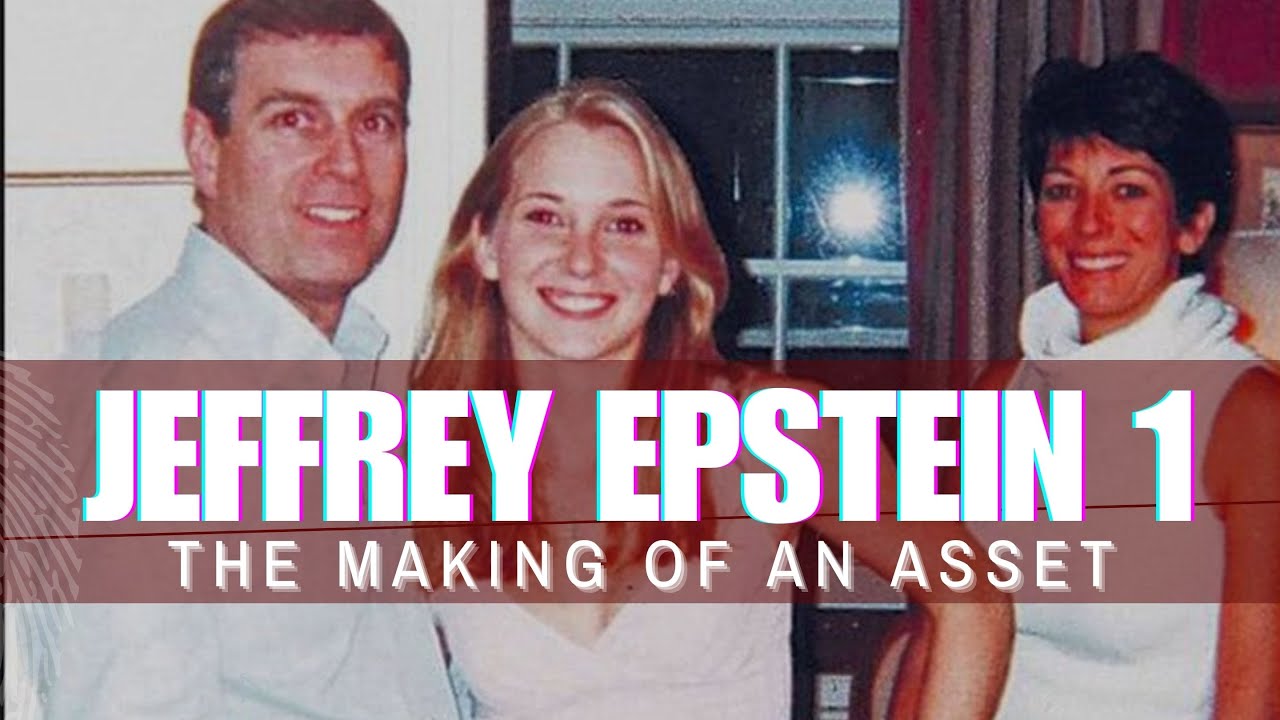
Jeffrey Epstein - I Told You So
Summer 2025: Tom the producer released an eight‑part video series tracing Jeffrey Epstein’s rise from obscure teacher to protected predator at the center of an international trafficking and blackmail network.
The topic arose from his investigation of the JFK assassination, which is largely a discussion about the intersection of organized-crime and the intelligence apparatus of the United States.
Once you find out that organized crime has always owned intelligence, and that sexual blackmail is a tool as old as the invention of the camera.. you'll naturally find your way to the global system of control that we've nicknamed "Jeffrey Epstein". One man's name is a preposterously misleading designation for a brutally perverse global economy.
Episode 1: Tom asked a question almost no official investigation wanted to touch that is now entirely mainstream: Was Jeffrey Epstein a spy—an intelligence asset—rather than just a rogue billionaire sex offender?
This article expands on Episode 1, “Was Jeffrey Epstein a Spy?”, by walking through the documented evidence that Epstein was trained in arms trafficking and money laundering, plugged into Israeli and U.S. intelligence circles, and repeatedly shielded from consequences that would have destroyed any ordinary criminal.
It also explains how this first episode sets the stage for the rest of NJ Criminal Podcast’s 2025 Epstein series.
In particular, the episode investigates:
Why a U.S. Attorney who gave Epstein his 2008 “sweetheart deal” later said that “Epstein belonged to intelligence and to leave it alone.”
How Epstein’s career shows a pattern of improbable promotions, protection, and disappearances from criminal cases that point to intelligence backing.
The role of early mentors like Adnan Khashoggi, Sir Douglas Leese, and Robert Maxwell in training Epstein in arms trafficking, money laundering, and sexual blackmail.
How these origin stories connect to the broader system detailed in later episodes: Maxwell‑style blackmail operations, safe havens in Israel, shadow banking, and modern tech‑enabled control.
Evidence that Epstein was treated as an intelligence asset
Acosta’s admission: “He belonged to intelligence”
Episode 1 opens with a moment that should have dominated national headlines but barely registered in the mainstream press. When Alex Acosta—then a U.S. Attorney in Florida—was questioned by the Trump transition team about his astonishingly lenient 2008 plea deal with Epstein, he reportedly gave a blunt explanation.
Acosta said he had been told that “Epstein belonged to intelligence and to leave it alone.”
Years later, when asked in 2019 whether Epstein was an intelligence asset, Acosta refused to confirm or deny it.
In the episode, Tom the producer notes that this is not speculation or rumor; it is a statement about prosecutorial decision‑making in a federal child trafficking case.
The result of that decision was a non‑prosecution agreement that reduced potentially dozens of federal counts to two local prostitution charges, sealed the broader evidence, and kept Epstein’s alleged co‑conspirators off the hook.
The Dalton School: hired by Bill Barr’s father
The episode then rewinds to Epstein’s first improbable break: his hiring at Manhattan’s elite Dalton School in 1974.
Epstein had dropped out of multiple colleges and held no degree or teaching credential.
Nevertheless, he was hired to teach at Dalton—one of New York’s most exclusive schools—by headmaster Donald Barr, father of future Attorney General Bill Barr, who would oversee the Justice Department when Epstein later died in federal custody.
Former students recalled Epstein’s inappropriate attention to teenage girls and his habit of attending student parties and trying to spend time with female students outside school.
Epstein quietly exited Dalton “for teaching issues,” but there were no criminal consequences, inaugurating a pattern the episode highlights repeatedly: inappropriate interest in minors, followed by a clean exit and a better opportunity.
Bear Stearns: meteoric rise and insider‑trading cloud
From Dalton, Epstein vaulted into high finance.
In 1976, he was hired by Bear Stearns, a prestigious investment bank, by senior partner Alan “Ace” Greenberg.
Within four years, this college dropout became a limited partner at the firm, a trajectory that seasoned Wall Street insiders in the episode describe as extraordinary.
In 1981, however, Epstein was interviewed in connection with an SEC insider‑trading investigation tied to a Bronfman‑related tender offer.
He resigned from Bear Stearns the day after that transaction, amid internal allegations of “illegal operations” and expense violations that should have permanently damaged his financial career. Instead, he walked away and immediately launched a private company.
Intercontinental Assets Group and the arms‑trafficking apprenticeship
Following his departure from Bear Stearns, Epstein founded Intercontinental Assets Group in 1981, describing himself as a “bounty hunter” for the rich—either retrieving stolen money from corrupt foreign leaders or hiding money for those leaders, depending on the account.
The crucial development during this period, according to sworn testimony presented in Episode 1, is Epstein’s training by high‑level arms dealers with deep intelligence ties.
Steven Hoffenberg, Epstein’s later business partner at Towers Financial, testified that Epstein was trained in arms trafficking and money laundering by Saudi arms dealer Adnan Khashoggi and British arms dealer Sir Douglas Leese.
Khashoggi has long been reported as having relationships with Israeli Mossad, Saudi intelligence, and U.S. intelligence.
Hoffenberg described Epstein as becoming a “major participant and principal” in these arms and laundering operations on behalf of Israeli interests.
Episode 1 argues that, at this point, Epstein’s work crosses a clear line from freelance crime into intelligence‑linked operations, where arms sales, covert finance, and blackmail often intersect.
Towers Financial: “technical mastermind” who disappears from the case
From 1987 to 1993, Epstein partnered with Hoffenberg at Towers Financial Corporation, which ran what was then one of the largest Ponzi schemes in U.S. history.
According to Hoffenberg’s sworn account, highlighted in the episode:
Epstein was the “technical mastermind” behind Towers’ fraudulent transactions, siphoning money from acquired insurance companies and selling hundreds of millions in unregistered promissory notes and bonds.
Epstein allegedly received substantial personal payments from the scheme, including $25,000 monthly checks.
When the scheme collapsed and Hoffenberg testified before a grand jury in 1993:
He explicitly told federal authorities that Epstein had designed and led the fraud.
Within three months, Epstein’s name vanished from the case; he was never indicted or charged.
Other Towers executives went to prison while Epstein walked away untouched.
Episode 1 presents this as a second major inflection point: a large‑scale financial crime, documented testimony against Epstein, and yet an invisible barrier preventing prosecutors from even naming him as a defendant.
Intelligence ties: Israel, CIA, and Robert Maxwell
The episode then brings in multiple sources who link Epstein directly to intelligence agencies, particularly Israeli services, during the 1980s.
Key evidence discussed:
Former Israeli military intelligence officer Ari Ben‑Menashe has stated that Epstein’s affiliation with Israeli intelligence dates back to at least the mid‑1980s and that he was introduced to Epstein by media tycoon Robert Maxwell.
Ben‑Menashe claims that both Jeffrey Epstein and Ghislaine Maxwell “were agents for Israel” and that he met Epstein several times in Robert Maxwell’s London office.
Hoffenberg told investigators that Epstein “boasted” of ties to Israeli intelligence and said that Ghislaine Maxwell had made the introduction.
Separate reporting cited in the episode notes that Epstein told at least one journalist he had worked for the CIA, and that he later denied those claims when pressed.
Episode 3 of the series returns to Robert Maxwell in detail, depicting him as a multi‑agency asset (MI6, KGB, Mossad) who pioneered the sexual blackmail methods and financial networks that Epstein would later modernize. (Palantir)
Episode 1 uses those connections to argue that Epstein’s presence in Maxwell’s world was not accidental networking; it was training and integration into an existing intelligence apparatus.
The Les Wexner connection and the architecture of cover
Power of attorney and the Manhattan mansion
By the late 1980s and early 1990s, Epstein had attached himself to one of the wealthiest and most powerful retail magnates in America: Leslie Wexner, founder of The Limited, Victoria’s Secret, and Abercrombie & Fitch.
The episode highlights several unprecedented facts:
Wexner granted Epstein sweeping power of attorney over his finances, giving him authority to sign checks, buy and sell properties, and manage corporate assets as if they were his own.
Wexner transferred the massive townhouse at 9 East 71st Street—the largest private residence in Manhattan—to Epstein for essentially nothing, despite its multi‑tens‑of‑millions value.
Epstein used Wexner’s brands, especially Victoria’s Secret, as a grooming and recruitment cover by presenting himself as a talent scout for young women and girls.
Episode 1 frames this as another layer of state‑style infrastructure: front companies, plausible business cover, and elite social legitimacy for an asset whose real value went far beyond investment advice.
Evidence of blackmail infrastructure
Later in the series, Tom the producer analyzes how Epstein’s properties functioned as blackmail factories.
Even as early as Episode 1, however, some key points are raised:
FBI agents testified in Ghislaine Maxwell’s trial that they seized hard drives and CDs with sexual material from Epstein’s Manhattan residence.
Photographs from that residence clearly show visible cameras in rooms, including Epstein’s bedroom.
Some seized evidence later went missing from federal custody, raising questions that Episode 7 (“They Think We’re Stupid”) returns to in detail.
Episode 1 argues that this is the natural evolution of the Maxwell‑style blackmail playbook, deployed with Wexner’s money and cover: wire the properties, compromise powerful guests, and store the footage where intelligence agencies—foreign and domestic—can selectively use or bury it.
The 2008 non‑prosecution agreement: intelligence protection in action
The final third of Episode 1 connects Epstein’s origin story to the 2005–2008 Florida case, where the “intelligence” explanation finally surfaces in an official context.
Operation Leap Year and a case “strong enough for life”
In 2005, a 14‑year‑old girl and her parents reported Epstein’s abuse to Palm Beach police, triggering a local investigation.
By 2006, the FBI had opened a federal investigation, Operation Leap Year, and compiled evidence that internal documents later described as strong enough to justify a life sentence.
Palm Beach police and FBI investigators identified dozens of victims and potential charges that, if pursued, could have exposed not just Epstein but a wide network of co‑conspirators and clients.
The non‑prosecution agreement and sealed deal
Instead, the outcome was one of the most notorious plea bargains in modern American history.
Then–U.S. Attorney Alex Acosta negotiated a secret non‑prosecution agreement with Epstein’s lawyers that dropped potential federal charges from about 60 counts to two state‑level prostitution charges.
The agreement immunized “potential co‑conspirators,” sealed the scope of the crimes, and prevented victims from fully participating—later found to violate their rights under the Crime Victims’ Rights Act.
Epstein served 13 months in a private wing of the county jail, enjoyed a six‑day‑a‑week “work release” that allowed him to leave the facility daily, and emerged to resume his life almost unchanged.
Episode 1 underscores that Acosta later justified this outcome by saying that higher‑ups told him Epstein “belonged to intelligence,” and that he should “leave it alone.” The series treats that statement not as a curiosity, but as a key to understanding why Epstein had been protected at every previous stage of his career.
How Episode 1 sets up the rest of the Epstein series
The Summer 2025 video series on NJ Criminal Podcast builds outward from the foundation laid in Episode 1: Was Epstein a Spy?
Episode 2 – Epstein's Private Aviation Network: Shows how Epstein’s aircraft, flight logs, and Teterboro‑centered operations created the logistical backbone of his trafficking and blackmail enterprise.
Episode 3 – Assistant Manager / Maxwell Dynasty: Follows Robert and Ghislaine Maxwell to demonstrate that the sexual blackmail model Epstein used was pioneered and refined decades earlier by multi‑agency assets.
Episode 4 – Robert Maxwell & Sexual Blackmail: Connects WWII‑era alliances between U.S. intelligence and organized crime, shadow banking at Castle Bank, and financial dynasties like the Bronfmans and Pritzkers directly into Epstein’s network.
Episode 5 – Hiding in Israel: Explores how Israeli law, the Law of Return, and extradition loopholes create safe havens for accused predators, including Epstein’s own post‑conviction trip to Israel and the Tom Alexandrovich case.
Episode 6 – A Bit of a Pattern: Systematically documents repeated patterns of protection, missing evidence, and unexplained deaths of potential witnesses.
Episode 7 – They Think We’re Stupid: Analyzes the 2025 document dump, missing footage, and a memo insisting there is “no client list” despite mountains of contradictory evidence.
Episode 8 – Dr. Bankinstein, JP Morgan, and Snow White: Traces how major banks, especially JP Morgan, enabled Epstein’s trafficking and blackmail empire and how trafficking plugs into a much larger global economy of exploitation.
By the time listeners reach the later episodes, the premise of Episode 1—that Epstein was a manufactured asset embedded in a preexisting system—has been repeatedly reinforced with evidence from aviation, finance, foreign policy, and contemporary trafficking cases.
Frequently Asked Questions
Was Jeffrey Epstein actually an intelligence asset?
Episode 1 does not claim to have an official intelligence file on Epstein, but it presents converging evidence suggesting he functioned as an asset.
This includes Alex Acosta’s statement that Epstein “belonged to intelligence,” sworn testimony from Steven Hoffenberg about Epstein’s training in arms trafficking for Israeli‑linked operations, and former Israeli officer Ari Ben‑Menashe’s claim that Epstein and Ghislaine Maxwell were agents for Israel.
Combined with Epstein’s repeated escapes from prosecution and his integration into known intelligence networks, the series argues it is more accurate to view him as an intelligence‑connected asset than as a lone predator who got lucky.
Why does the Dalton School job matter?
The Dalton job shows how early and inexplicably Epstein was placed in proximity to elite families and minors.
Hired by Donald Barr's father, William, despite lacking a degree or credentials, Epstein worked at one of Manhattan’s top private schools and was remembered for focusing inappropriate attention on teenage girls before being quietly let go.
Episode 1 treats this as the first in a sequence of improbable placements and soft landings that suggest someone was opening doors and closing investigations for him.
What is the significance of Towers Financial in this story?
Towers Financial was a massive Ponzi scheme where, according to Hoffenberg’s sworn testimony, Epstein served as the “technical mastermind” behind fraudulent transactions worth hundreds of millions of dollars.
When prosecutors moved in, Hoffenberg told a grand jury that Epstein ran the fraud, yet Epstein’s name vanished from the case and he was never charged.
Tom points to this as a critical example of how Epstein’s intelligence value appears to have shielded him from accountability even in large, documented financial crimes.
How do Robert Maxwell and Ghislaine Maxwell connect to Episode 1?
Episode 1 introduces Robert Maxwell as a prototype: an intelligence‑linked media baron who used sexual blackmail and illicit finance for multiple agencies, including Mossad.
Ari Ben‑Menashe and other sources described in the series say Maxwell brought Epstein into this environment in the 1980s and that both Epstein and Ghislaine were integrated into Israeli intelligence networks.
Later episodes show how Ghislaine Maxwell became Epstein’s partner in recruitment and logistics, effectively importing the Maxwell blackmail blueprint into Epstein’s U.S. operations.
Isn’t calling Epstein a “spy” just a conspiracy theory?
The series deliberately grounds its claims in court records, sworn testimony, declassified files, and on‑the‑record statements from officials and former intelligence officers.

AI SEO and EEAT : How Small Law Firms Can Win in an LLM-First World